20 November 2026 · 7 min read · Garage door repairs
Broken Garage Door Spring? What to Do First
Heard a bang and now the garage door will not lift? How to tell a spring has broken, what to do straight away, and why springs are not a DIY job.
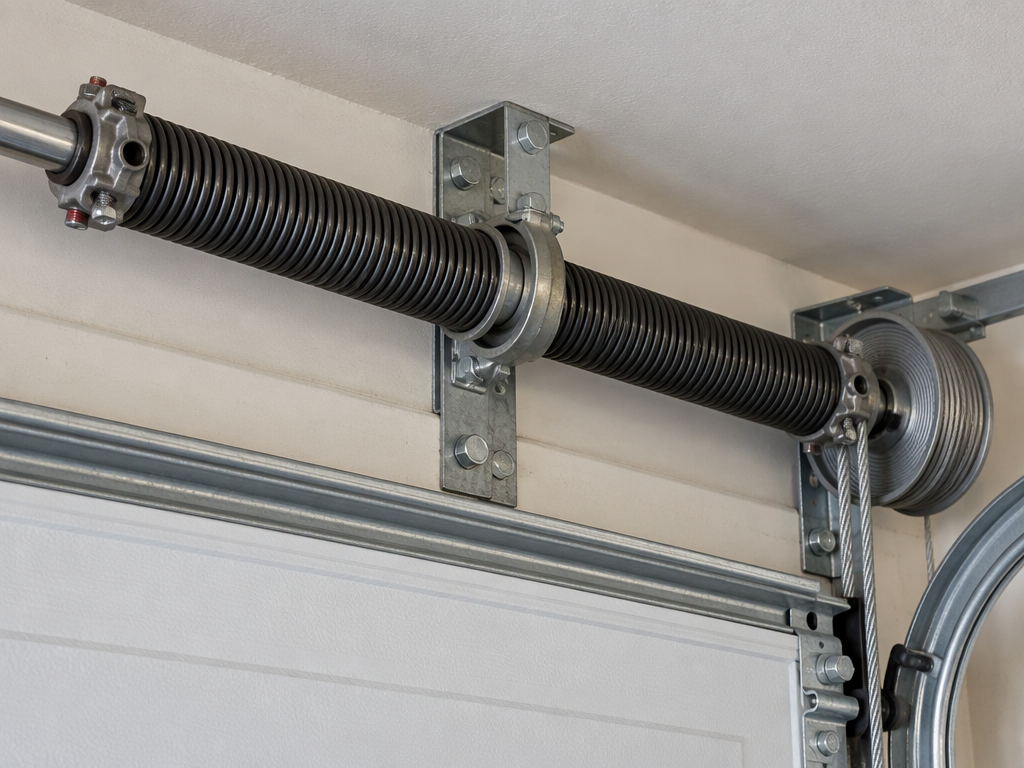
It usually happens at a bad moment. You press the remote on the way to work, the opener hums, and the garage door rises a few centimetres before stopping. Or you hear a loud bang from the garage in the evening when nobody was near it, and the next morning the door will not move. In both cases the most likely cause is the same: a broken garage door spring.
This guide explains how to recognise a broken spring, what to do in the first few minutes, what not to do, and what a proper repair involves. It is written for homes in Camberwell and the surrounding suburbs, but the advice applies to almost any residential garage door.
Why the spring matters more than the opener
Most people assume the opener lifts the garage door. It does not, at least not on its own. A typical sectional or roller door is far heavier than it looks, and it is the springs that carry that weight. When they are correctly tensioned, the door is balanced so that it can be lifted by hand with modest effort and will stay roughly where it is left halfway up.
The opener's job is to guide a balanced door up and down. It is not designed to lift the door's full weight. That is why a broken spring changes everything at once: the weight that the spring used to hold is suddenly carried by the opener, the cables and anyone who tries to lift the door.
There are two main spring systems on residential doors:
- Torsion springs sit on a steel shaft directly above the opening of a sectional door. They twist to store energy, and lift cables run from drums at each end of the shaft to the bottom corners of the door.
- Roller door springs are built into the drum that the door curtain rolls onto. You usually cannot see them, but they work on the same principle.
Some older sectional and tilt doors use extension springs that stretch along the horizontal tracks. They should always have a safety cable running through them.
How to tell a spring has broken
A broken torsion spring is often visible from inside the garage. Look up at the shaft above the door, from a safe distance. A broken spring usually shows a gap of a few centimetres somewhere in the coil, where the steel has snapped and the two halves have unwound.
Other signs include:
- A loud bang, like a firecracker, from the garage when nobody was using the door.
- The opener runs but the door lifts only a little, then stops or reverses.
- The door is suddenly extremely heavy when you try to lift it with the opener released.
- The door slams down instead of closing smoothly.
- One side of the door sits higher than the other, or a cable is hanging loose.
Springs also wear out gradually. A door that drifts down when left half open, or that has become noticeably heavier over months, is telling you the springs have lost tension. That is the best time to call, before the spring breaks completely.
What to do in the first few minutes
The safest thing is to do very little:
- Leave the door where it is. If it is closed, leave it closed. If it is stuck open, do not try to force it down.
- Unplug the opener. Switch it off at the power point so nobody in the house presses the remote and runs the motor against a door it cannot lift.
- Keep people, pets and cars clear. A door with a broken spring can move unexpectedly, especially if a cable has also come off its drum.
- Take a photo if you can do it safely. A picture of the shaft above the door, taken from the floor, helps identify the spring type before anyone arrives.
- Call and describe what you heard and saw. The sound, how the door is sitting and whether it has an opener are all useful.
If your car is stuck in the garage, it is tempting to pull the manual release and heave the door up. Please do not. With the spring broken, the full weight of the door is in your hands, and it can drop back down without warning.
What not to do
There are a few things that cause most of the injuries and extra damage associated with garage door springs:
- Do not try to wind, unwind or adjust a spring. Torsion springs store a large amount of energy. Professionals use purpose-made winding bars and follow a set sequence for good reason. A screwdriver or a length of pipe is not a substitute.
- Do not keep pressing the remote. Running an opener against a door it cannot lift can strip the drive gear or burn out the motor, turning a spring repair into a spring and opener repair.
- Do not remove the cables or brackets at the bottom of the door. The bottom brackets are connected to the cables under tension. Loosening them on a door that still has tension in one spring is dangerous.
- Do not buy a spring online and assume it will fit. Springs are sized to the weight and height of the specific door. The wrong spring leaves the door out of balance and wears out the opener.
What a proper spring repair involves
A spring replacement should follow a clear sequence. The door is secured so it cannot move. Any remaining tension in the system is released safely. The broken spring is removed, and the door is weighed and measured so the replacement can be sized correctly.
Where a door has two springs of the same age, both are usually replaced together. The second spring has done the same number of cycles as the first and is normally close to failing too. Replacing only one leaves the door unevenly balanced and usually means a second call-out soon after. That reasoning should always be explained before the work is done, not simply added to the bill.
Once the new springs are fitted, they are tensioned and the door is balanced so it holds roughly halfway when lifted by hand. The cables, drums and bottom brackets are checked, because a spring failure can shock-load them. Finally, the door is reconnected to the opener and tested through several full cycles, including the safety reversal.
You can read more about what is covered on our garage door spring replacement page.
Why springs break
Springs are rated for a certain number of open-and-close cycles. A door used several times a day will reach that number much sooner than one used occasionally. Other factors shorten their life:
- Rust. Melbourne's damp winters and poorly ventilated garages encourage corrosion on the coils, which adds friction and stress.
- Lack of lubrication. A light lubricant on the coils reduces friction between them.
- An unbalanced door. If the door was never correctly balanced, one spring may be working harder than it should.
- Cold mornings. Steel is slightly more brittle when cold, and springs often fail on a cold start.
A regular garage door service checks spring tension and balance, looks for rust, and lubricates the coils. It will not make a spring last forever, but it often gives warning before one fails.
When it is not the spring
Not every door that will not lift has a broken spring. If the door moves freely by hand with the opener released, the spring is probably fine and the problem is more likely in the opener, its safety beams or its travel limits. Our garage door opener repair page covers those faults.
If the door is hanging crooked or one side has dropped, a cable may have snapped or slipped off its drum, sometimes as a result of the spring failure. That needs the same caution, and is covered on the cable and track repair page.
Getting it fixed
Nina Locksmith Camberwell Service repairs garage door springs across Camberwell, Hawthorn East, Canterbury, Surrey Hills, Glen Iris and Balwyn. We are open 8 am to 6 pm, seven days a week. We do not offer a 24/7 service, and we will not promise an arrival time we have not confirmed with you on the call.
If you think a spring has broken, leave the door closed, unplug the opener and call 03 4828 3634. You can also request a quote on the contact page with a description and a photo of the shaft above the door.