12 November 2026 · 5 min read · Garage door repairs
Garage Door Opener Not Working? Common Causes
Garage opener humming, reversing or doing nothing? The common causes in Melbourne garages, simple checks you can safely make, and when to call for help.
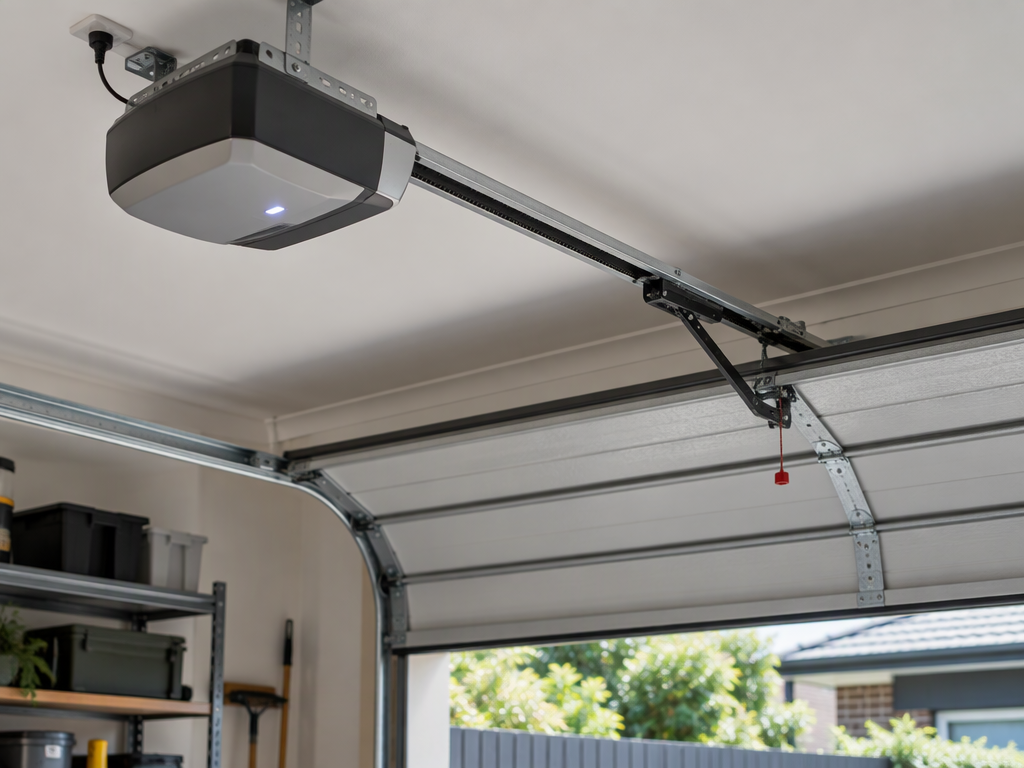
An automatic garage door is one of those conveniences you only notice when it stops. You press the remote and nothing happens, or the door goes down, touches the floor and comes straight back up, or the motor hums without the door moving at all. Each of those symptoms points somewhere different.
This guide works through the common causes, the checks you can safely make yourself, and the point at which it is time to call. It applies to both roller and sectional doors with openers, which covers most automatic garage doors in Camberwell and the surrounding suburbs.
First: is it the opener or the door?
Before blaming the opener, find out whether the door itself is healthy. With the door fully closed, pull the manual release, usually a cord with a red handle hanging from the opener's carriage. That disconnects the door from the opener. Now lift the door by hand.
- If it lifts smoothly with moderate effort and stays roughly where you leave it halfway up, the door is balanced and the fault is probably in the opener.
- If it is very heavy, stiff, jerky or uneven, the door is the problem. The opener has likely been straining against it.
Do not do this test if you heard a bang, can see a gap in a spring, or the door is hanging crooked. Those are signs of a broken spring or a cable or track fault, and the door should be left alone.
This test matters because an opener is designed to guide a balanced door, not to lift dead weight. Repairing or replacing an opener on a badly balanced door only buys a little time.
The door goes down, then comes straight back up
This is the most common opener complaint, and it is usually a safety feature doing its job.
Safety beams. Most openers have a pair of small sensors near the floor on each side of the opening. They send an invisible beam across the doorway, and if anything breaks the beam while the door is closing, the door reverses. Common causes of false reversals:
- A sensor has been knocked out of line by a bin, bike or car. The small light on each sensor usually shows steady when aligned and flickers or goes out when not.
- Dirt, cobwebs or leaves on the sensor lenses.
- Something in the path of the beam: a hose, a box, a pot plant.
- Low sun shining directly into a sensor. West-facing garages in the late afternoon are the classic case, and it often only happens at certain times of year.
Wiping the lenses and clearing the doorway is a safe check. Re-aligning a sensor gently by hand is usually fine too. What you should never do is disable, bypass or tape over the beams to make the door close. They are there to stop a door closing on a child, a pet or a car.
Force and limit settings. If the door reverses as it touches the floor, the close limit may have drifted, so the opener thinks the floor is an obstruction. Or the force setting may be too sensitive for a door that has become slightly heavier. These are adjustments best made by someone who will re-test the safety reversal afterwards.
The motor hums but the door does not move
A humming opener is trying to move and cannot. The usual causes:
- The carriage is disengaged. If someone has pulled the manual release, the opener runs but the door stays put. Most openers re-engage when you run them through a cycle or push the carriage back by hand; check the opener's instructions.
- A stripped drive gear. Many chain and belt openers have a plastic gear inside the motor housing that wears out, especially if the opener has been fighting a heavy door.
- A door that is too heavy. A weak or broken spring leaves the opener unable to lift the door.
- A seized door. Rusted rollers, a bent track or something jammed in the track can stop the door moving.
The hand test above separates the first two from the last two.
Nothing happens at all
When neither the remote nor the wall button does anything:
- Check the opener is plugged in and the power point is switched on. Garage power points get switched off more often than you might think.
- Check whether the opener's light comes on. If not, it may have no power, or a tripped circuit breaker.
- Try the wall button. If it works but the remote does not, the problem is the remote.
- Check whether the opener has a lock or vacation mode switched on at the wall panel.
If the opener has power but still does nothing, the control board, the wiring to the wall button or a safety switch may have failed. That needs diagnosis.
The remote has stopped working
Remote problems are usually simple:
- A flat battery. The most common cause by far.
- Poor range from a damaged aerial on the opener, interference from nearby devices or a remote at the end of its life.
- Lost pairing after a power cut on some older openers.
If a remote has been lost, the right move is to clear the opener's memory and re-pair only the remotes you hold, so the lost one stops working. That and keypad installation are covered on our remote and keypad page.
The door stops short
If the door stops before it is fully open or fully closed, the travel limits have usually drifted. Limits tell the opener where the door's open and closed positions are. They can shift after a power cut, after work on the door, or as parts wear. Resetting them is straightforward, but the safety reversal should always be tested afterwards.
Repair or replace the opener?
Many opener faults are repaired with an adjustment or a part: a new gear, carriage, belt, sensor or remote. Replacement becomes the better value when:
- Parts are no longer available for the model.
- The opener is underpowered for the door it is fitted to, often after a heavier door has been installed.
- The control board has failed on an older unit.
- You want features the old opener cannot offer, such as quieter operation or battery backup.
Our opener repair and opener installation pages explain both.
A note on electrical work
Openers plug into a standard power point. If a power point needs to be installed, moved or repaired, that is a job for a licensed electrician. We do not carry out electrical wiring, but we will tell you exactly where power is needed before an opener is fitted.
Getting help
Nina Locksmith Camberwell Service repairs garage door openers across Camberwell, Hawthorn East, Canterbury, Surrey Hills, Glen Iris and Balwyn, open 8 am to 6 pm, seven days a week. When you call, tell us what the opener does when you press the remote, and whether the door moves freely by hand.
Call 03 4828 3634 or request a quote.