14 November 2026 · 5 min read · Garage door costs & choices
Roller Door or Sectional Door? A Plain Comparison
Roller or sectional garage door? How each works, the space each needs, noise, insulation, upkeep and which suits Camberwell homes and garages best.
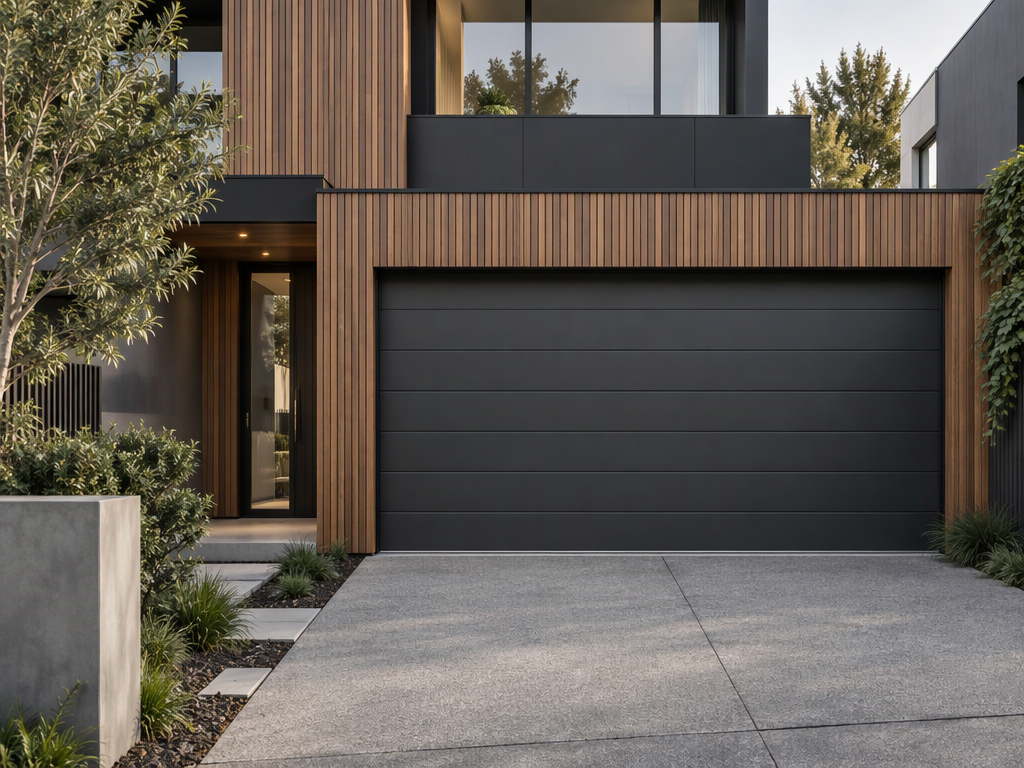
Walk down almost any street in Melbourne's inner east and you will see both: the familiar corrugated roller door on a post-war brick garage, and the flat-panelled sectional door on a newer townhouse. Both do the same job, but they do it very differently, and the right choice depends on the garage, the house and how you use it.
This guide compares the two plainly. It is useful whether you are replacing a door, building, or simply trying to understand the door you already have.
How a roller door works
A roller door is a single curtain of thin, corrugated steel. When it opens, the curtain rolls up onto a drum mounted above the opening, much like a window blind. The spring that balances the door sits inside the drum, and the edges of the curtain run in vertical guides on each side of the opening.
Because the door rolls into a compact coil, it takes up very little room inside the garage. Nothing runs along the ceiling.
How a sectional door works
A sectional door is made of several horizontal panels joined by hinges. Each panel carries rollers that run in a pair of tracks. When the door opens, the panels travel up the vertical tracks and then curve back along horizontal tracks to sit flat under the ceiling.
The weight is usually balanced by torsion springs on a shaft above the opening, connected to the bottom of the door by cables wound on drums. The door bends at each hinge as it turns the corner from vertical to horizontal.
Space and fit
This is often the deciding factor, especially in older Camberwell, Hawthorn East and Canterbury garages.
- Roller doors need room above the opening for the drum, but almost nothing inside the garage. They suit garages with low ceilings, storage along the ceiling, or a short depth.
- Sectional doors need headroom and depth inside for the tracks and the door to sit under the ceiling. They do not need a drum above the opening, but they do need clear space where the tracks run. They suit garages with reasonable ceiling height and nothing hanging from it.
If your garage has a low ceiling or a beam just inside the opening, a sectional door may not fit without special low-headroom hardware.
Width
Roller doors work well for single garages and many double garages. On very wide openings, sectional doors are generally the more common choice, partly because a wide roller curtain is heavy and less rigid. Most double and triple garages on newer Balwyn and Glen Iris homes have sectional doors for this reason.
Noise
Sectional doors are usually quieter, especially with nylon rollers and a belt-drive opener. That matters if there is a bedroom above or beside the garage, which is common in townhouses.
Roller doors make a characteristic rumble as the curtain rolls up. A well-maintained roller door with clean guides is reasonably quiet, but it rarely matches a good sectional door.
Insulation and sealing
Sectional doors are generally better sealed. Each panel can be insulated, and the panels close tightly against perimeter and bottom seals. If the garage is used as a workshop, gym or extra living space, or if it opens into the house, that makes a real difference to temperature and dust.
Roller door curtains are thin single-skin steel and seal less tightly at the sides and top. Brush seals help, but they will not match an insulated sectional door.
Appearance
Roller doors have a utilitarian look that suits post-war houses and plain brick garages. They come in many colours but always look like roller doors.
Sectional doors offer more choice: flush panels, ribbed panels, woodgrain finishes and timber-look designs. On a period home or a renovated façade, a timber-look sectional door in a muted colour usually sits more comfortably on the street. Where a heritage overlay applies, the council may have a view on appearance.
Upkeep and common faults
Both types are durable, but they fail in different ways.
Roller doors most often:
- Lose spring tension gradually and become heavy to lift.
- Drag in guides clogged with leaves and grit.
- Catch on a guide bent by a car or bin.
- Develop creases in the curtain that stop it rolling evenly.
Sectional doors most often:
- Break a torsion spring, usually with a loud bang.
- Fray or slip a lift cable, so the door runs crooked.
- Wear rollers and crack hinges, making the door noisy and rough.
- Bend a track or bottom panel after an impact.
Our roller door repair and sectional garage door repair pages cover each in detail.
Automation
Both types can be automated, but they use different openers. Roller door openers usually mount beside the drum and drive it directly. Sectional door openers usually mount on the ceiling with a rail running back from the door. Either way, the door must be balanced before an opener is fitted. Our opener installation page explains what is involved.
A quick summary
| Consideration | Roller door | Sectional door |
|---|---|---|
| Room needed | Above the opening | Headroom and depth inside |
| Ceiling space | Left free | Used by tracks and door |
| Noise | Moderate | Usually quieter |
| Insulation | Limited | Can be insulated |
| Wide openings | Possible | Usually preferred |
| Look | Utilitarian | More design choice |
Which suits your garage?
There is no universally better door. A roller door is often the right choice for an older single garage with a low ceiling or a laneway garage used for storage. A sectional door is usually better for wide garages, garages attached to the house, and homes where noise, insulation or appearance matter.
If you are not sure what will fit, we can measure the opening and explain the options. Nina Locksmith Camberwell Service installs and repairs both types across Camberwell, Hawthorn East, Canterbury, Surrey Hills, Glen Iris and Balwyn, open 8 am to 6 pm, seven days a week.
Call 03 4828 3634, or see our new garage door installation page and request a quote.