Understanding Door Lock Types: Deadlocks, Latches, and Keying Systems
Demystify door lock types: explore deadlocks, latches, cylinders, and keying systems to understand how they secure your Camberwell property.
Understanding Door Lock Types: Deadlocks, Latches, and Keying Systems
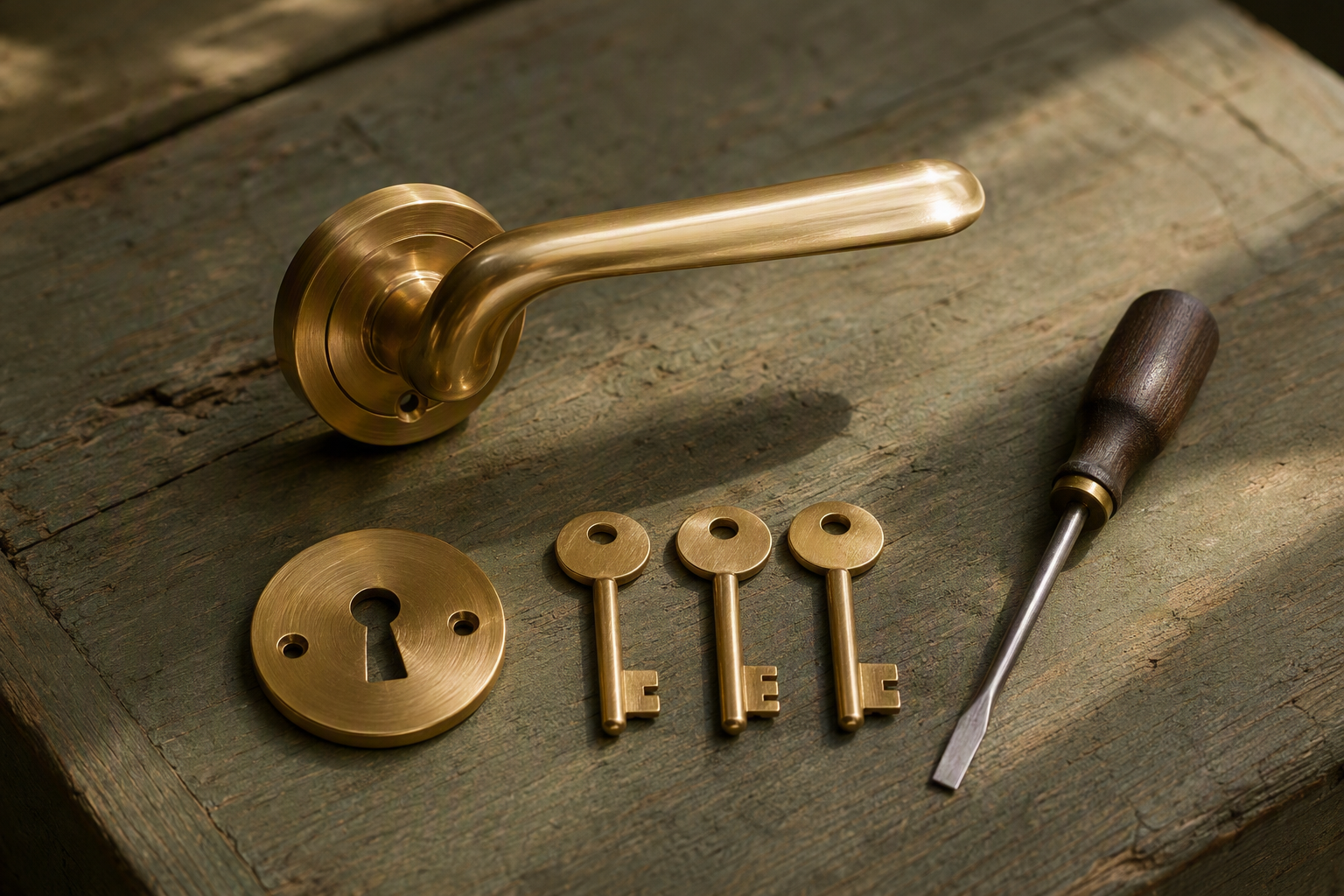
For homes and businesses across Camberwell, understanding the distinct components that make up your door hardware is fundamental to both security and seamless daily operation. The intricate details that keep a door working involve far more than just a key and a lock. From the everyday convenience of a latch to the robust protection of a deadlock, and the sophisticated control offered by various keying systems, each element plays a critical role. This article delves into the functionality of various locking mechanisms, helps you identify different components like cylinders, bolts, and strike plates, and explains how these individual parts collectively contribute to the overall security and precision of your entryways. Whether you reside in a period home with classic brass hardware or manage a modern office suite, a clear grasp of these essential door lock types can help you make informed decisions about maintenance, upgrades, and effective security.
The Functionality of Various Locking Mechanisms
Every door has a story told by its hardware, and the primary characters are often the latch and the deadlock. While they might appear similar, their functions are distinctly different, each serving a unique purpose in the daily interaction with your entryways and contributing to its overall security profile. Understanding these core mechanisms is the first step in appreciating the precision engineering that keeps your doors operating as intended.
Latches: The Everyday Engagement
A latch is the mechanism that automatically keeps a door closed without necessarily locking it. Most commonly, it's a spring-loaded bolt that retracts when the door handle is turned and extends back into the strike plate when the handle is released. This allows for quick entry and exit, providing basic closure against wind or accidental opening. You'll encounter various types of latches, including the typical spring bolt found in most passage sets, roller latches which are common on cupboard doors, and drive-in latches designed for simpler installation. While essential for convenience, a latch alone offers minimal security, as it can often be forced open without significant effort. Issues like a latch not engaging or a door that won't close securely are common indications that this everyday mechanism requires attention.
Deadlocks: The Fortifying Bolt
In contrast to a latch, a deadlock features a solid, rectangular bolt that is manually operated – typically by a key from the exterior or a thumbturn from the interior. This bolt is not spring-loaded, meaning it cannot be "attacked" or forced back into the door with simple pressure or a shim. Once extended into the door frame, a deadlock provides a significant layer of resistance against forced entry, making it a cornerstone of residential and commercial security. Deadlocks come in single-cylinder (key outside, thumbturn inside) and double-cylinder (key on both sides) configurations, each offering distinct security and safety considerations. The robust nature of a deadlock’s bolt is what gives it its name and its primary security advantage.
Combined Mechanisms: Mortice and Tubular Locks
Many doors, particularly in older Melbourne homes with their mixed hardware, feature locks that integrate both latch and deadbolt functions into a single unit. Mortice locks, for instance, are complex mechanisms installed within a deep pocket (mortice) in the door's edge, often housing separate bolts for both latching and deadlocking. These can be incredibly durable and are commonly found in period properties, often adorned with elegant brass hardware. Tubular locks, on the other hand, are typically simpler cylindrical units, often combining a spring latch and a separate deadbolt into two distinct bore holes in the door. The type of combined mechanism often dictates the aesthetic and functional longevity of the door hardware, requiring specific expertise for repair or replacement.
Identifying Different Components: Cylinders, Bolts, and Strike Plates
Understanding the individual components of your door lock is crucial, not only for security but also for diagnosing issues and communicating effectively with a locksmith. These elements work in concert, and a fault in one can impact the entire system. From the intricate mechanism that interprets your key to the reinforcement on your door frame, each part has a specific function.
The Lock Cylinder: The Heart of Keying
The lock cylinder is arguably the most identifiable part of any locking system – it’s the component where you insert your key. Inside the cylinder, a series of pins, springs, and tumblers align when the correct key is inserted, allowing the cylinder's core (the plug) to rotate and operate the locking mechanism. The most common type is the pin tumbler cylinder. Cylinders vary significantly in design: a Euro cylinder is a standalone unit often seen on uPVC or multi-point locking systems, while a rim cylinder is surface-mounted and used with rim deadlatches, and a mortice cylinder is threaded into a mortice lock body. The quality and complexity of the cylinder directly influence the lock's resistance to picking or drilling, making it a critical security feature.
Bolts: Securing the Doorway
When we talk about "bolts" in relation to a lock, we are referring to the metal projections that extend from the door into the frame. There are two primary types:
- Latch Bolts: These are the angled, spring-loaded bolts that automatically extend into the strike plate when the door closes. They are designed for convenience, holding the door shut but offering minimal security. If your door feels stiff or a stiff door lock needs a fix, the latch bolt might be the culprit.
- Deadbolts: As discussed, these are solid, often rectangular, bolts operated by a key or thumbturn. They do not have a spring mechanism, which makes them far more resistant to forced entry than a latch bolt. When engaged, a deadbolt provides a powerful barrier, effectively "dead-locking" the door in place.
The strength and throw (how far it extends) of these bolts are key indicators of a lock's security.
Strike Plates and Keepers: The Frame's Role
Often overlooked, the strike plate is a critical piece of metal hardware mounted on the door frame. It features an opening or a series of openings designed to receive the latch bolt and deadbolt when the door is closed and locked. For mortice locks, a "keeper" might be a more substantial box-like component that is morticed into the door frame.
The strike plate serves several vital functions:
- Guides the Bolt: It helps guide the bolt into its receiving position smoothly.
- Reinforces the Frame: It protects the softer door frame material from wear and tear caused by the bolt repeatedly striking it.
- Enhances Security: A robust, well-secured strike plate with long screws can significantly increase the door's resistance to kick-ins, as it helps distribute the force across a larger area of the door frame.
Proper alignment and secure installation of the strike plate are paramount for both the smooth operation and the security effectiveness of your entire door hardware system.
How Different Lock Types Contribute to Overall Door Security
Understanding the individual components is one thing; appreciating how they combine to create a comprehensive security system is another. For properties in Camberwell, where architectural styles range from period homes with ornate timber doors to modern apartment blocks, the nuanced interplay of different lock types, hardware quality, and precision installation forms the backbone of effective security.
Layering Security: Beyond the Single Lock
Relying on a single lock, such as a basic spring latch, leaves a door vulnerable. True door security is achieved through a layered approach, often involving multiple, complementary locking mechanisms. For instance, combining a passage set (which includes a latch) with a separate, robust deadlock provides both everyday convenience and substantial security when required. The deadlock acts as a secondary line of defence, independent of the latch, making it significantly harder for an intruder to bypass. This layering is particularly important for front entry doors, where the primary objective is to deter and resist forced entry effectively. Residential locksmith services in inner-east Melbourne often recommend this multi-lock strategy.
Hardware Quality and Installation Precision
The effectiveness of any lock type is intrinsically linked to the quality of the hardware itself and the precision of its installation. A high-quality deadlock made from durable materials like solid brass or steel will inherently offer greater resistance to physical attacks than a poorly constructed alternative. Similarly, the meticulous installation of these components is non-negotiable. A misaligned strike plate, loose screws, or an improperly morticed lock can severely compromise even the most robust hardware, making it susceptible to failure under stress. This attention to detail is particularly vital for preserving the integrity of heritage door lock repair in Camberwell, where period homes require both functional security and aesthetic consideration.
The Role of Keying Systems
Beyond the physical hardware, the "keying system" itself plays a crucial role in managing access and enhancing security. This refers to how keys operate locks and how different locks relate to each other. For example, a single key might operate multiple locks on a property (keyed alike), or different keys might be required for each lock (keyed different). The ability to rekey locks – changing the internal pins so that only new keys operate them, without replacing the entire lock body – is a powerful security tool. This is particularly valuable during tenancy changes or if keys are lost, ensuring that previous access is immediately revoked. Rekeying services offer a cost-effective way to maintain security without the expense of full lock replacement.
Navigating Keying Systems: Simplicity and Control
The interaction between your keys and your locks is a fundamental aspect of door security and access control. Beyond the physical mechanisms of bolts and latches, understanding different keying systems empowers you to manage who has access to your property and to adapt your security as needs change. For properties in Camberwell, where diverse needs arise from family homes to commercial premises, selecting the right keying approach is as important as choosing the right lock.
Rekeying for Renewed Security
Rekeying is a highly effective and efficient security measure that allows you to change which key operates a lock without replacing the entire lock mechanism. A locksmith achieves this by adjusting the internal pin configuration of the lock cylinder to match a new key. This process is invaluable for many situations, such as when you move into a new property, if you've lost keys, or following a change in tenants. It immediately invalidates old keys, providing renewed security with minimal disruption and cost. For landlords and property managers in Melbourne, particularly during tenancy turnover, rekeying is a standard practice to maintain security protocols. If you're weighing your options, understanding the differences between rekey vs. replace locks can help you make the right security choice for your situation.
Master Key Systems: Hierarchical Access
For businesses, apartment complexes, or larger residential properties in Camberwell, a master key system offers a sophisticated solution for hierarchical access control. In such a system, individual locks can be opened by their own unique "change key," but all or a designated group of these locks can also be opened by a single "master key." This provides immense convenience for property managers, cleaning staff, or building supervisors who need access to multiple areas without carrying a large ring of individual keys. These systems are carefully designed and implemented to ensure security is maintained while streamlining access for authorized personnel. Property management lock solutions for tenancy turnover in Melbourne often integrate master keying for efficiency.
Keyed-Alike vs. Keyed-Different
For most homeowners, the choice often comes down to "keyed-alike" or "keyed-different" configurations for their various locks:
- Keyed-Alike: This means that multiple locks (e.g., front door, back door, garage door) are set up to be operated by the same single key. This offers significant convenience, as you only need one key to access all entry points to your property.
- Keyed-Different: Conversely, "keyed-different" means each lock has its own unique key. While less convenient, it can offer a slight security advantage if, for instance, a key for a lesser-used shed lock is lost, it doesn't compromise the security of your main entry points.
The decision between these two options depends on your personal preference for convenience versus a marginal increase in compartmentalized security. For expert advice on securing shopfronts and commercial entries on Burke Road & beyond, or your family home, professional guidance ensures the best balance of function and protection.
Frequently Asked Questions About Door Lock Types
What's the fundamental difference between a deadlock and a spring latch?
A spring latch uses a spring-loaded bolt that retracts when the handle is turned and closes automatically, providing basic closure. A deadlock, however, has a solid bolt that is manually operated by a key or thumbturn and cannot be forced back into the door, offering significantly higher security.
Can I rekey any type of lock?
Most traditional pin tumbler locks, which are common in residential and commercial settings, can be rekeyed. However, certain high-security locks or older, worn-out mechanisms might not be suitable for rekeying and may require replacement. It's always best to consult with a professional locksmith.
How do I know if my lock needs repair or replacement?
If your lock is stiff, difficult to operate, the key gets stuck, or the latch isn't engaging properly, it might need repair. If the lock is severely damaged, very old, has been compromised in a break-in, or you desire a significant security upgrade (e.g., moving from a basic latch to a robust deadlock), replacement is often the better option. A locksmith can assess the condition and advise you.
Why is my door latch not engaging properly?
A door latch that isn't engaging can be due to several reasons, including a misaligned strike plate on the door frame, a worn or bent latch bolt, loose door hinges causing the door to drop, or issues within the internal mechanism of the lock itself. Often, adjustments to the strike plate or hinges can resolve the issue, but sometimes the latch mechanism may need repair or replacement.
Elevating Your Door's Performance and Security
Navigating the world of deadlocks, latches, and keying systems reveals the sophisticated engineering behind your everyday entry points. From the simple convenience of a spring latch to the unyielding security of a deadbolt, and the strategic control offered by rekeying or master key systems, each element is a testament to meticulous design. For residents and businesses throughout Camberwell and the surrounding inner-east Melbourne suburbs, understanding these components is key to maintaining both the functionality and robust security of your property.
At Nina Locksmith Camberwell, we appreciate the distinct architectural character of our local area and the need for precision in every detail. Whether you require expert lock repair for a stiff mechanism, a complete lock replacement to enhance security, or rekeying services for renewed peace of mind, our focus is on delivering solutions that blend seamlessly with your property's aesthetics and operational needs. We are dedicated to providing the details that keep a door working flawlessly, offering tailored advice and craftsmanship that respects your home or business. For thoughtful locksmith services and genuine expertise in door hardware, reach out to us.
Nina Locksmith Camberwell Service 666 Burke Rd, Camberwell VIC 3124, Australia Phone: 03 4828 3634 Email: service@ninalocksmithcamberwell.com